
Description
Product Overview
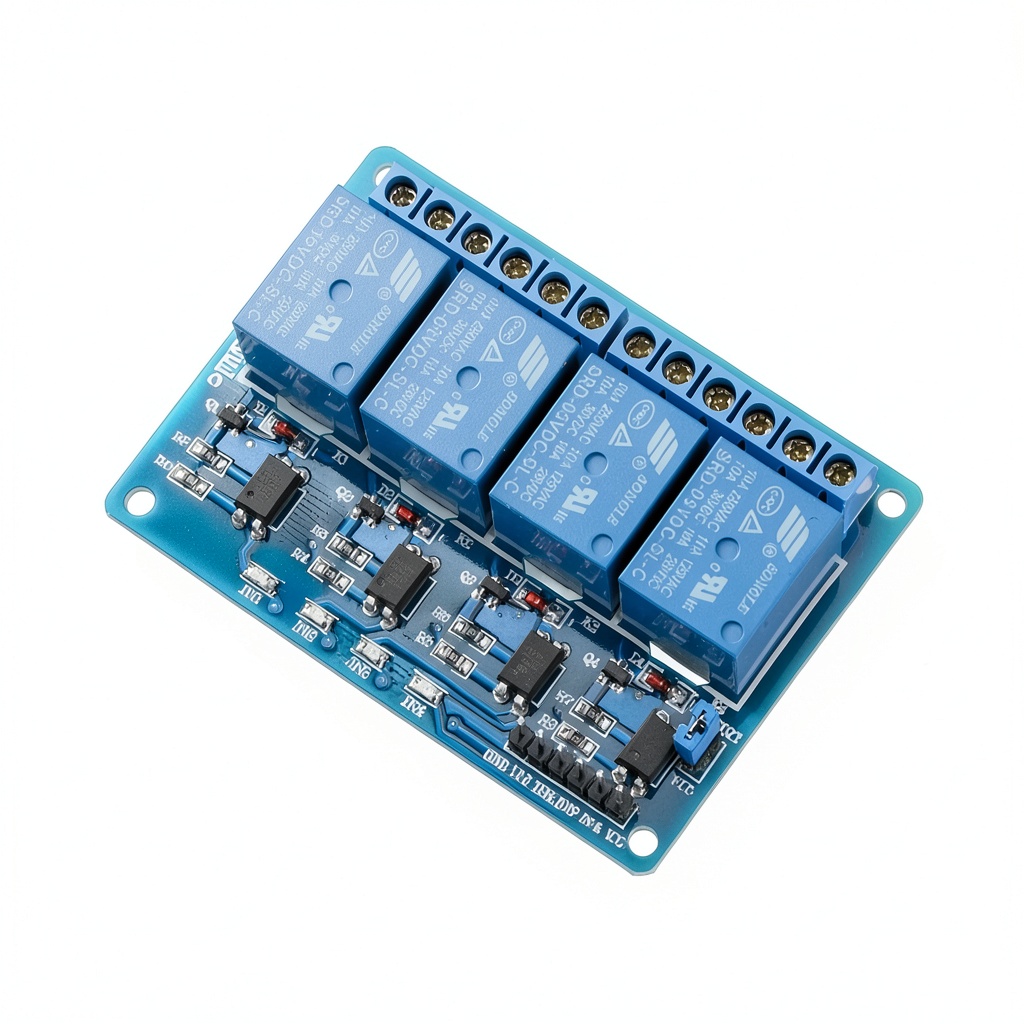
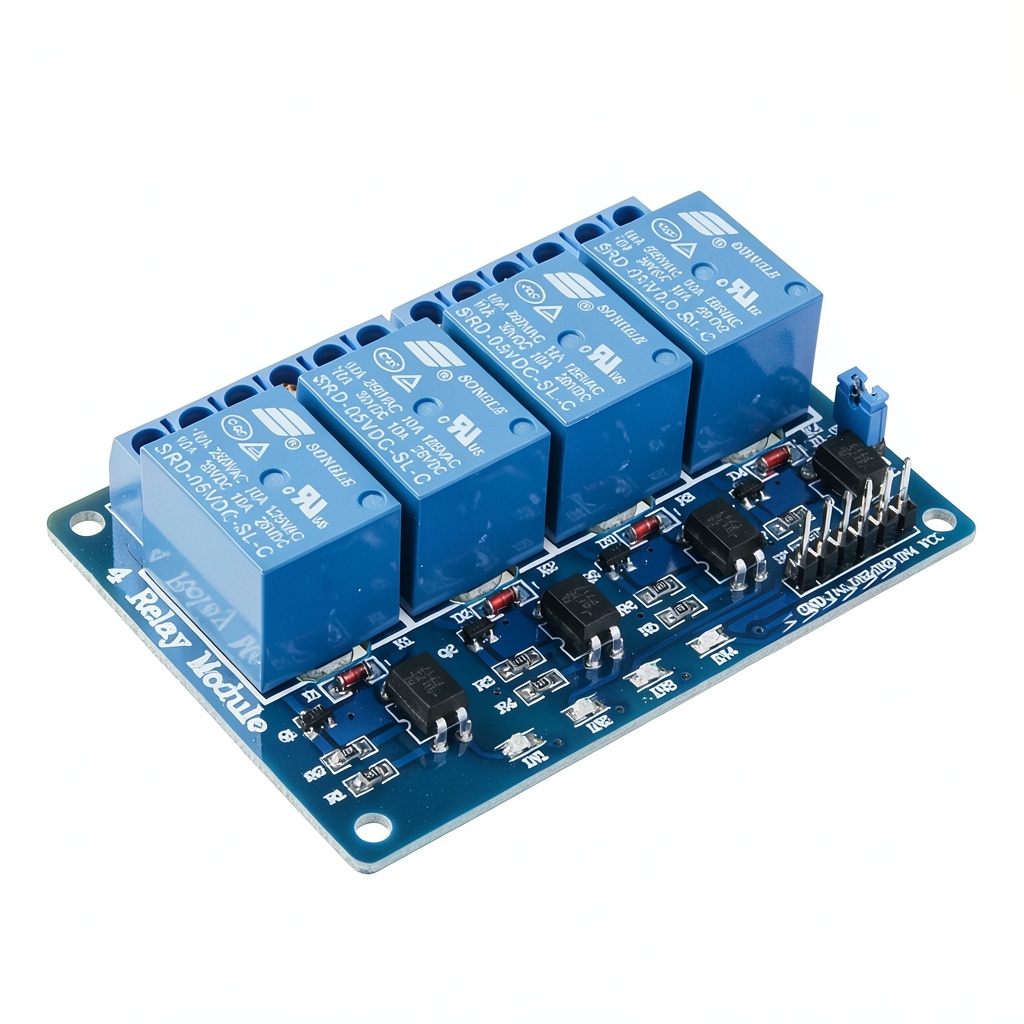
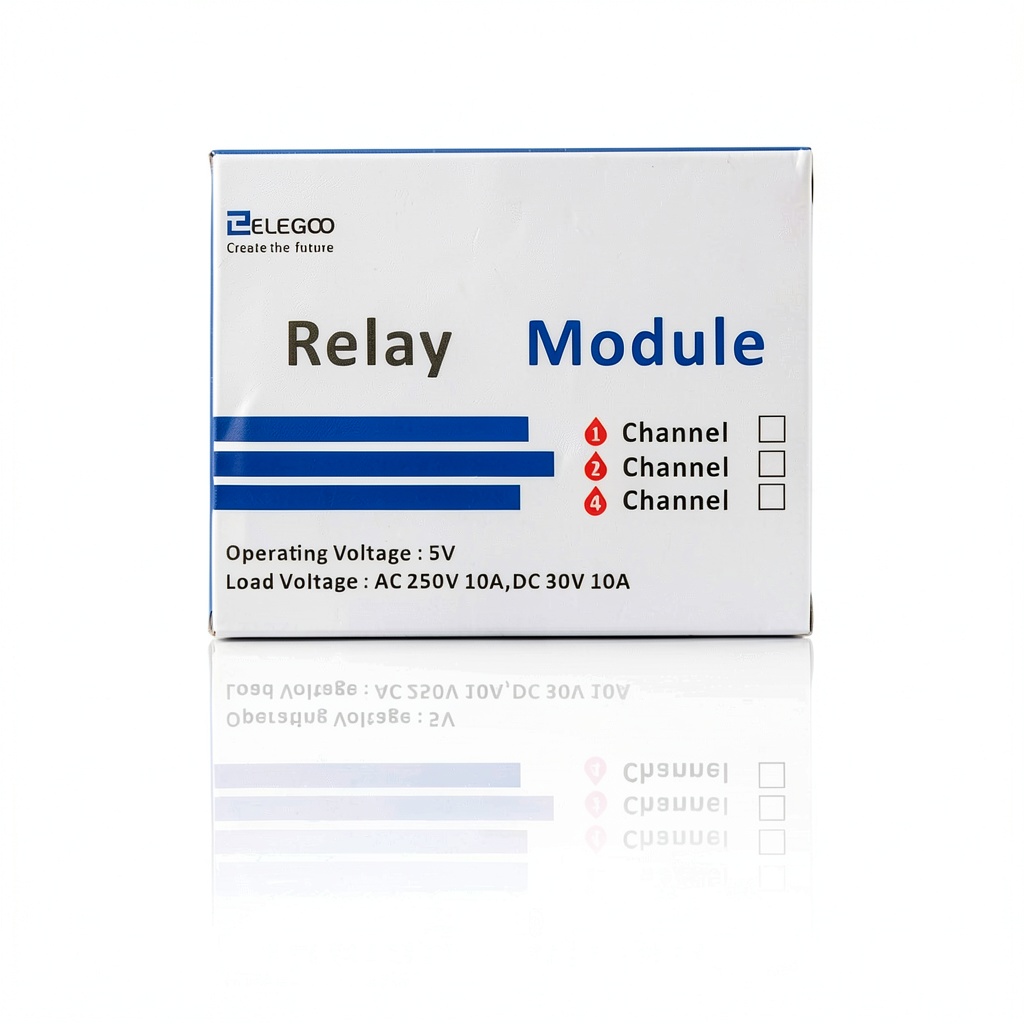
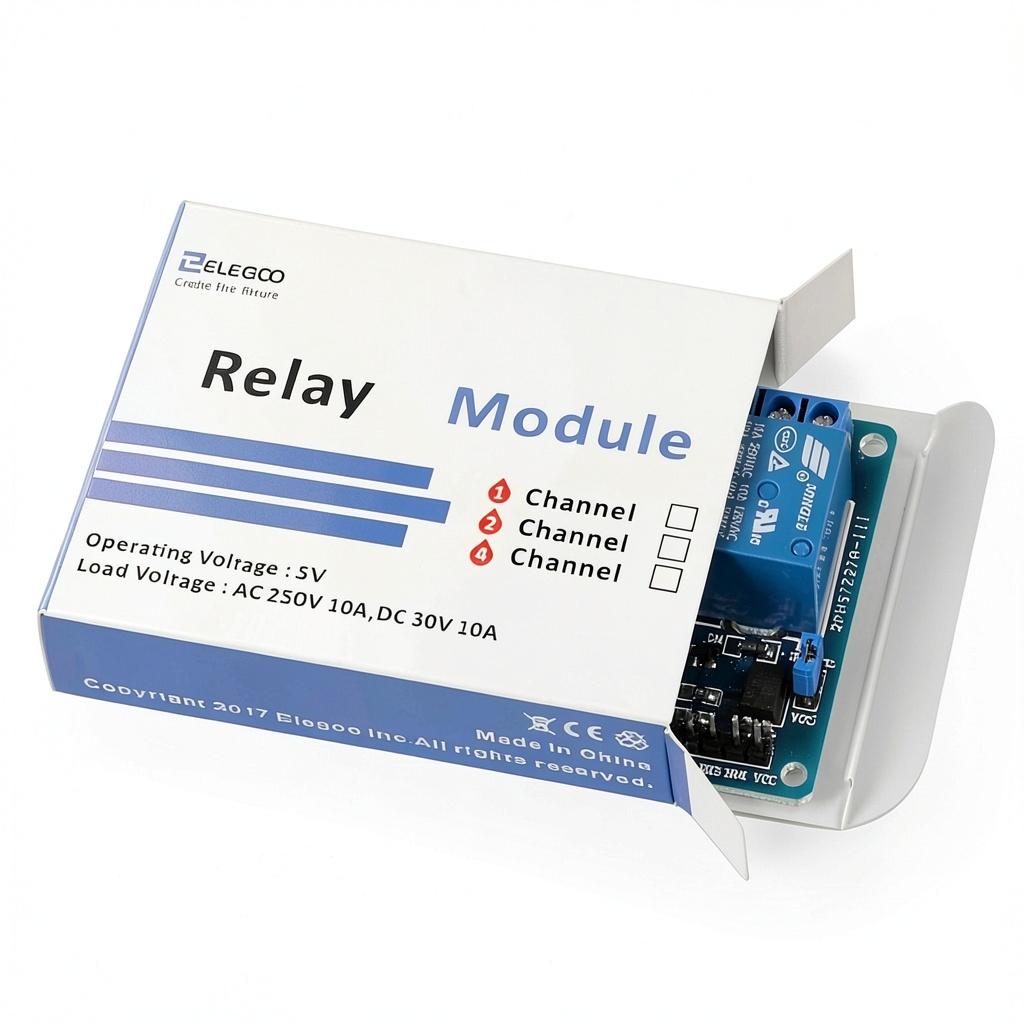
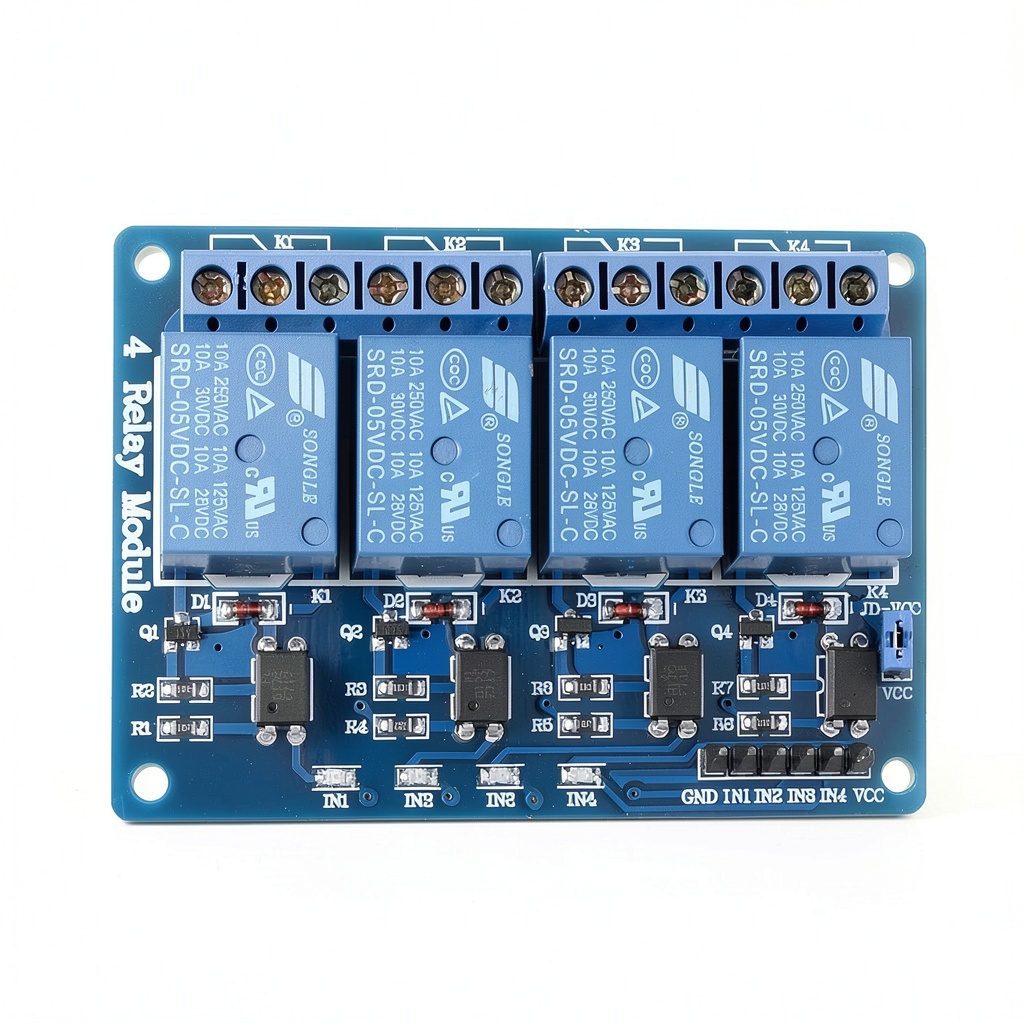
The ELEGOO 4‑channel 5V DC relay module is engineered for robust performance in both hobbyist and professional environments. Each relay channel can handle a maximum contact rating of AC250V 10A or DC30V 10A, delivering the flexibility needed for a wide range of applications, from simple LED control to driving high‑power motors. The board incorporates optocoupler isolation on each channel, ensuring that the low‑voltage control side remains completely protected from the high‑voltage switching side, which greatly reduces the risk of damage to sensitive microcontrollers.
Physically, the module measures 3.35 × 2.32 × 0.91 inches and weighs just 1.76 ounces, making it compact enough to fit into tight enclosures while still providing ample space for wiring and heat dissipation. The relay contacts are rated for 10 A continuous current, and the board includes built‑in LED indicators that illuminate when a channel is active, offering immediate visual feedback during testing and operation. The module is powered by a 5 V DC supply and uses active‑low input logic, which aligns with the standard signaling conventions of most Arduino‑compatible development boards.
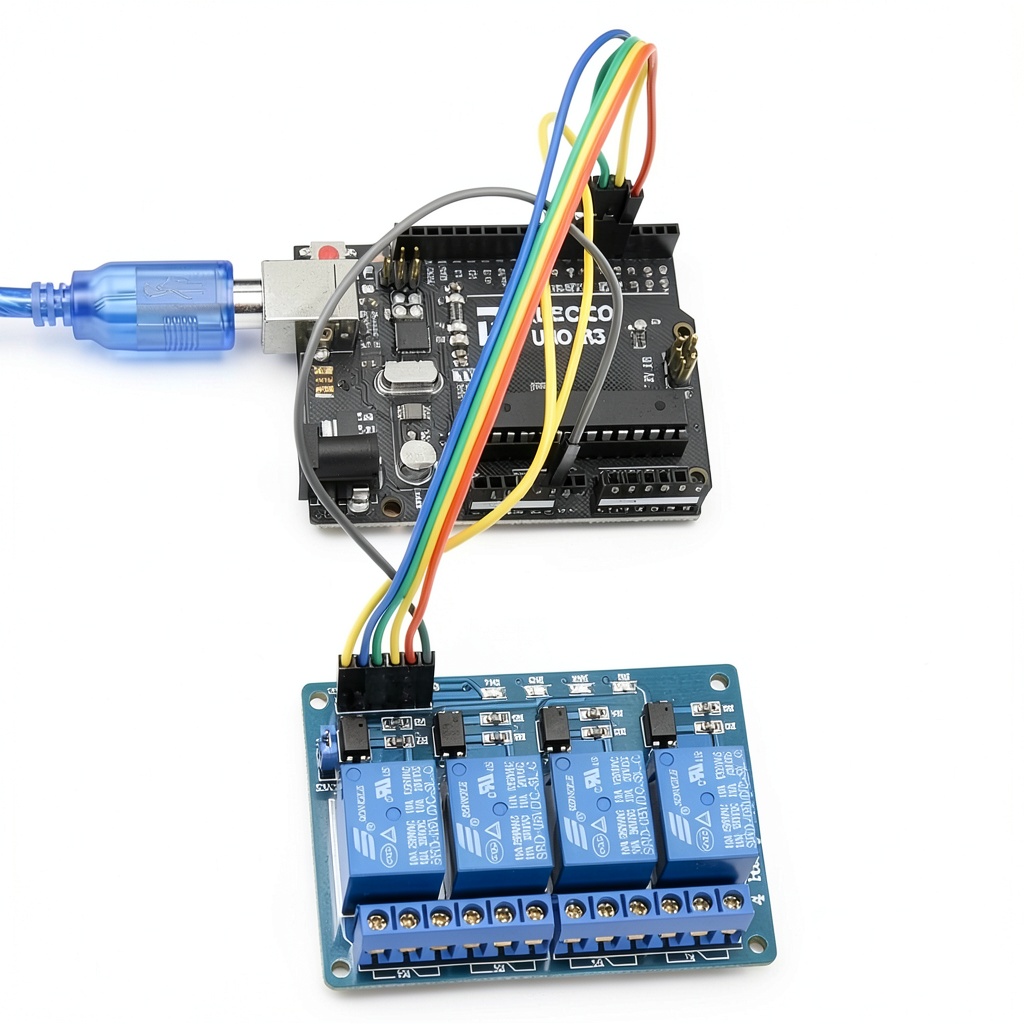
Designed with a standard 2.54 mm (0.1 in) pin header layout, the module can be directly soldered onto a perfboard or plugged into a breadboard for rapid prototyping. The pinout includes VCC, GND, JDV (jumpers for voltage selection), and four IN pins that correspond to each relay channel. This straightforward interface allows developers to integrate the relay board into existing projects without the need for additional driver circuitry, simplifying both hardware design and firmware development.
Usage
In practical terms, the ELEGOO relay module excels in scenarios where reliable, isolated switching of high‑voltage loads is required. Typical use cases include home automation systems that control lighting, fans, and HVAC equipment, as well as industrial control panels that manage pumps, solenoids, and motor starters. Because the module supports both AC and DC loads, it can be employed in renewable energy projects such as solar charge controllers or battery management systems, where the ability to switch DC currents safely is essential.
The module’s compatibility with a broad spectrum of microcontroller families—including Arduino UNO R3, Mega 2560, STM32, PIC, AVR, and even PLC‑style controllers—means it can be seamlessly incorporated into educational kits, research prototypes, and commercial products alike. Developers can write simple digital‑output code to toggle the relays, taking advantage of the active‑low logic to reduce the number of required GPIO pins. The built‑in LED status indicators provide immediate confirmation of relay activation, which is especially valuable during debugging or when deploying the system in the field.
For projects that demand remote or networked control, the relay module can be paired with Wi‑Fi or Ethernet shields, enabling users to trigger relays over the internet or via local network protocols. This makes it an excellent choice for IoT‑enabled smart‑home devices, remote monitoring stations, and distributed sensor networks that need to actuate physical components based on sensor data or user commands.
Why Choose Us
Choosing the ELEGOO relay module means selecting a product that combines high‑quality components with thoughtful engineering. The relays themselves are sourced from reputable manufacturers, guaranteeing long‑term durability and consistent performance under continuous operation. The optocoupler isolation not only protects your controller but also complies with industry safety standards, providing peace of mind for both developers and end‑users.
Our commitment to quality extends beyond the hardware. Each unit undergoes rigorous testing for electrical safety, contact resistance, and thermal performance before it leaves the factory. This thorough quality assurance process results in a low failure rate and reliable operation even in demanding environments such as factories, laboratories, and outdoor installations.
In addition to the product itself, ELEGOO offers comprehensive technical support, including detailed datasheets, wiring diagrams, and example code libraries for popular development platforms. Should you encounter any issues, our responsive customer service team is ready to assist with troubleshooting, firmware guidance, and warranty claims, ensuring a smooth experience from purchase to deployment.
Key Features
- Four independent relays each rated for AC250V 10A or DC30V 10A, covering a wide range of load types.
- Integrated optocoupler isolation protects microcontrollers from high‑voltage spikes and noise.
- Active‑low input logic matches the standard signaling of Arduino and other development boards for easy integration.
- LED status indicators on each channel provide instant visual feedback during testing and operation.
- Responsive after‑sales support with detailed documentation, example code, and a dedicated help desk.
FAQ
Can this relay module be powered directly from an Arduino board?
Yes. The module requires a 5 V DC supply, which can be sourced from the Arduino’s 5 V pin, provided the total current draw of the relays does not exceed the Arduino’s regulator limits.
What does “active‑low” mean for the input pins?
Active‑low means the relay is triggered when the input pin is pulled to a low voltage (near 0 V). This is a common convention for many microcontroller platforms and simplifies wiring because the input can be driven directly by a digital output pin.
Is the module safe to use with high‑power AC appliances?
Absolutely. Each relay channel is rated for up to 10 A at 250 V AC, which is sufficient for most household lighting, fans, and small appliances. Always ensure proper wiring practices and consider using a fuse for added protection.
How does the optocoupler improve reliability?
The optocoupler provides electrical isolation between the control side (microcontroller) and the load side (relay contacts). This prevents voltage spikes, noise, or accidental short circuits on the high‑voltage side from damaging the low‑voltage control circuitry.
Can I stack multiple relay modules together?
Yes. Multiple modules can be connected in parallel to expand the number of controllable channels, as long as the power supply can handle the combined current requirements and the control pins are properly managed in the firmware.
}
Reviews
There are no reviews yet.